| Marka Adı: | ZMSH |
| Adedi: | 2 |
| fiyat: | 20USD |
| Paketleme Ayrıntıları: | özel kartonlar |
| Ödeme Şartları: | T/T |
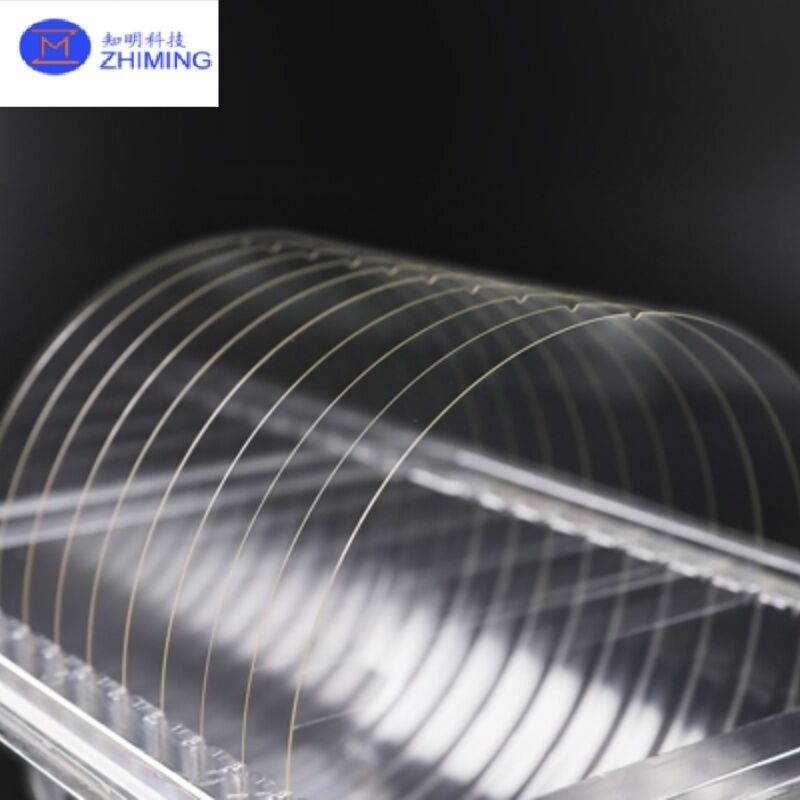
BF33 glass, also known as BOROFLOAT® 33 borosilicate glass, is a high-performance float glass material with excellent thermal stability, high optical transparency, low thermal expansion, and strong chemical resistance. It is widely used in semiconductor processing, MEMS devices, microfluidics, optical windows, sensor packaging, laboratory instruments, and high-temperature observation applications.
Compared with ordinary soda-lime glass, BF33 glass offers better dimensional stability under temperature changes and improved resistance to chemical corrosion. Due to its low coefficient of thermal expansion, BF33 is also suitable for silicon-glass bonding, wafer-level packaging, and precision glass substrate applications.
![]()
BF33 glass has a low coefficient of thermal expansion, which helps reduce thermal stress, deformation, cracking, and bonding failure during heating or cooling processes. This makes it suitable for thermal cycling, anodic bonding, semiconductor processing, and high-temperature applications.
BF33 borosilicate glass provides excellent heat resistance and thermal shock resistance. It can maintain stable performance under elevated temperature environments, making it ideal for high-temperature observation windows, furnace windows, heating platforms, and industrial equipment.
BF33 glass offers high transparency in the visible and near-infrared range. Its clear appearance and good optical uniformity make it suitable for optical windows, sensor covers, inspection windows, microfluidic chips, and analytical instruments.
BF33 glass has good resistance to water, acids, alkalis, and many organic solvents. It is suitable for chemical analysis, laboratory devices, biomedical testing, microfluidic systems, and harsh industrial environments.
BF33 glass has good hardness, wear resistance, and mechanical strength. It can be processed into customized shapes and sizes according to customer drawings, including cutting, grinding, polishing, drilling, slotting, chamfering, CNC machining, coating, and cleaning.
BF33 glass can be used for MEMS devices, sensor packaging, silicon-glass anodic bonding, wafer-level packaging, carrier wafers, and temporary bonding processes. Its low thermal expansion helps reduce mismatch stress between silicon and glass.
With excellent transparency, chemical resistance, and surface quality, BF33 glass is suitable for microfluidic chips, lab-on-a-chip devices, biomedical testing chips, capillary electrophoresis chips, and chemical analysis platforms.
BF33 glass is commonly used for optical windows, industrial observation windows, high-temperature viewing windows, inspection windows, laser equipment windows, and protective covers for instruments.
BF33 glass can be used in laboratory reactors, chemical analysis instruments, vacuum equipment windows, furnace observation windows, medical analysis devices, and industrial machine vision components.
| Item | Available Options |
|---|---|
| Material | BF33 / BOROFLOAT® 33 Borosilicate Glass |
| Shape | Round wafer, square plate, rectangular plate, custom shape |
| Size | Customized according to drawings |
| Thickness | Customized according to application requirements |
| Surface | Single-side polished, double-side polished, float surface, ground surface |
| Processing | Cutting, edging, chamfering, drilling, slotting, CNC machining |
| Coating | AR coating, metal coating, dielectric coating, customized coating |
| Cleaning | Standard cleaning, precision cleaning, wafer-grade cleaning |
| Packaging | Single-piece packing, box packing, wafer cassette packing |
| Property | Typical Value |
| Material Type | Borosilicate Glass |
| Coefficient of Thermal Expansion | Approx. 3.25 × 10⁻⁶ K⁻¹ |
| Density | Approx. 2.23 g/cm³ |
| Approx. 525°C | |
| Softening Point | Approx. 820°C |
| Approx. 450°C | |
| Approx. 500°C | |
| Approx. 1.471 | |
| Young’s Modulus | Approx. 64 kN/mm² |
| Approx. 0.20 | |
| Knoop Hardness | Approx. 480 |
![]()
BF33 glass is suitable for semiconductor processing, MEMS devices, microfluidic chips, optical windows, laboratory instruments, high-temperature observation windows, sensor covers, and industrial equipment.